The Most Common Workplace Injuries: Understanding, Filing Claims, and Prevention Strategies
Discover the most common workplace injuries and how to handle them: from back injuries workers comp and repetitive strain injury workers comp to slip and fall workers comp and construction accident workers comp. Learn when injuries are covered, step-by-step claims, top prevention tips, and documentation strategies to protect your health and benefits.
Estimated reading time: 16 minutes
Key Takeaways
The most common workplace injuries include back injuries, repetitive strain injuries, slips/trips/falls, and construction accidents; most are covered if they arise out of and in the course of employment.
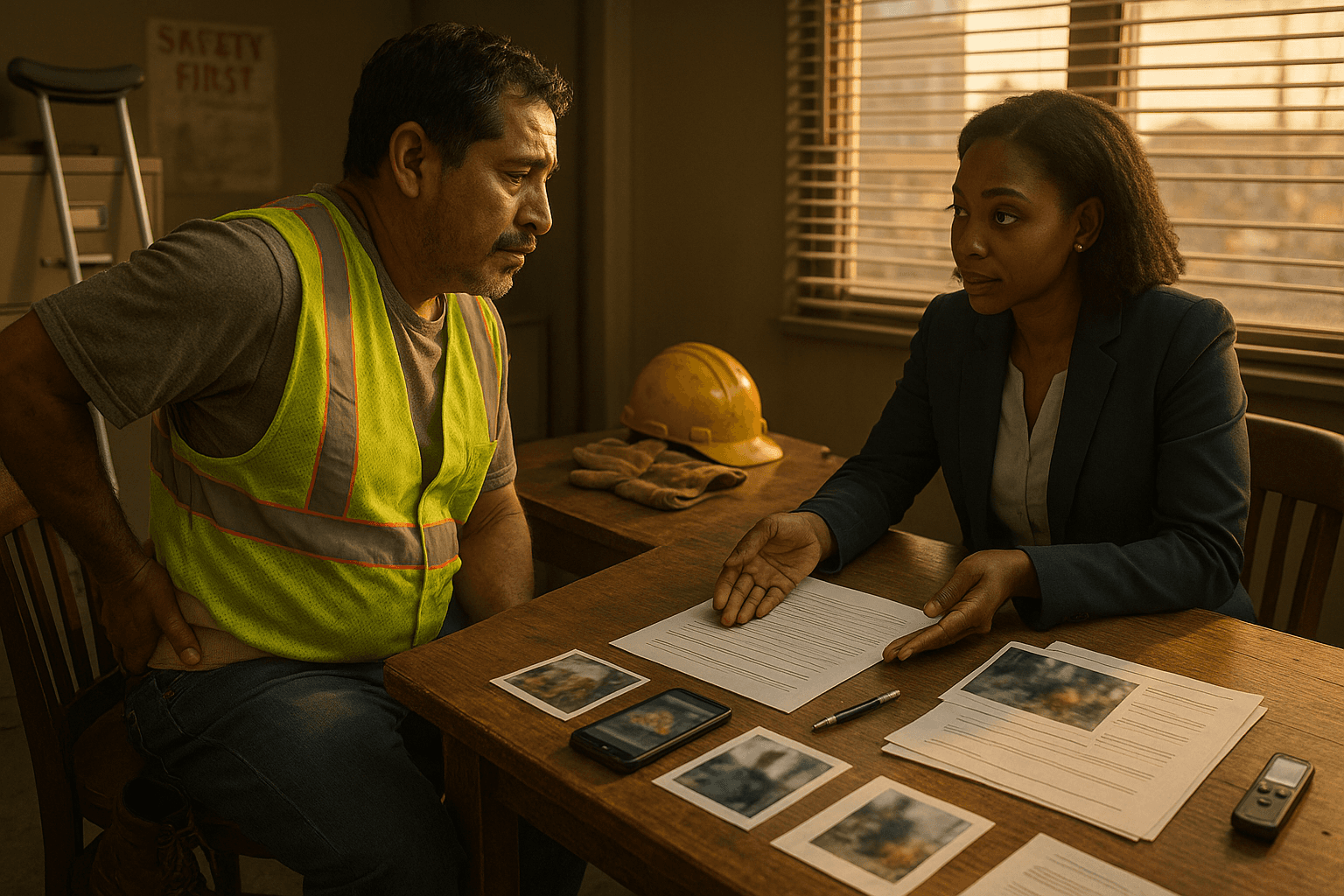
Strong documentation—incident reports, timely medical records, photos, and witness statements—often makes the difference between approval and denial.
Report injuries immediately, seek medical care, and follow your state’s workers’ compensation process and deadlines carefully.
Prevention works: training, ergonomics, safe lifting, housekeeping, PPE, and frequent safety check-ins can reduce incidents and claims.
State rules vary on providers, timelines, independent contractor status, and benefits—always check your state’s workers’ comp agency.
Table of Contents
Introduction
Quick statistics snapshot
Most common workplace injuries — details, coverage & prevention
Workers’ compensation basics: what’s covered — and what’s not
How to file a workers’ comp claim — step-by-step
Common reasons claims are denied — and how to respond
Prevention: practical steps by injury type
Real-world case studies: how claims succeed or fail
Resources & downloadable templates
Conclusion
FAQ
Introduction
The most common workplace injuries can upend a person’s health, income, and sense of security. If you’re wondering which injuries happen most often and whether they are covered by workers’ comp, this guide explains the most common workplace injuries, when they’re compensable, how to file a claim, and practical steps to prevent them.
Each year, workers report millions of incidents. In 2019 there were nearly 3.5 million nonfatal workplace injuries and illnesses, and employers and insurers paid $62.9 billion in workers’ compensation benefits the year before. According to the National Safety Council, sprains, strains, and tears are the leading type of nonfatal injury among serious cases, highlighting how common soft-tissue harm is at work.
Workers’ compensation laws vary by state, including who qualifies, deadlines, and how you choose a doctor. Always check your state workers’ comp agency for details, and use the resources linked throughout this guide. We also point to authoritative sources like the National Safety Council Injury Facts and an overview of workplace injury statistics as you read.
Quick statistics snapshot
Nearly 3.5 million nonfatal workplace injuries and illnesses were reported in 2019.
About $62.9 billion in workers’ compensation benefits were paid in 2018.
Industries with the most incidents include trade, transportation, utilities, health care, and construction.
Sprains, strains, and tears lead nonfatal injuries, making up roughly a third of serious cases.
Visual suggestion: Add a small bar chart showing top industries and injury types (suggested alt text: “Top industries and injury types — most common workplace injuries, based on national statistics”).
Most common workplace injuries — details, coverage & prevention
Back injuries: workers’ comp considerations — back injuries workers comp
Back injuries include strains, sprains, herniated discs, and lumbar sprains. They can be acute (a single lifting incident) or cumulative trauma from months or years of overexertion. These injuries are widespread across physically demanding jobs and even desk work where posture and ergonomics are poor. Prevention programs and training are emphasized by safety resources that outline common mechanisms and fixes for these injuries, as noted in this overview of common workplace injuries and how to avoid them.
Common causes include heavy lifting, awkward postures, sudden twists, and falls. Concrete scenarios include a warehouse associate lifting bulky items onto pallets, a nurse transferring a patient between beds, an overnight stocker moving inventory up ladders, or an office worker developing chronic low back pain from prolonged sitting and improper chair height.
Typical industries: construction, warehousing, health care, manufacturing, and office environments with prolonged sitting or repetitive tasks. Statistically, back-related soft-tissue injuries sit within the broader category of strains and sprains, which the National Safety Council identifies as a leading cause of serious work injuries.
Prevention (do this today):
Safe lifting protocol: plan the lift, test the weight, bend your knees, keep the load close to your body, and avoid twisting; use team lifts for heavy or awkward loads.
Use mechanical aids: pallet jacks, dollies, hoists, conveyors, and adjustable-height work tables.
Training cadence: new-hire training plus annual refreshers, with short monthly “micro-drills.”
Stretching and micro-breaks: brief movement every 30–60 minutes to reduce fatigue.
Workers’ comp coverage notes: Back injuries are typically covered if they “arise out of and occur in the course of employment.” If you have a preexisting condition, you may need clear medical causation showing how work substantially aggravated it. Employers or insurers sometimes request an Independent Medical Exam (IME) to evaluate causation and work restrictions.
Documentation needed: a prompt incident report with time and location, immediate medical notes from an ER or clinic linking cause to work, a job duty description that shows lifting or awkward postures, witness statements, and prior medical history to address preexisting conditions. For context on how prevalent these injuries are across industries, see the national workplace injury statistics.
Repetitive strain injury: workers’ comp — repetitive strain injury workers comp
Repetitive strain injury (RSI) refers to damage from repetitive micro-trauma, including carpal tunnel syndrome, tendonitis, and lateral epicondylitis. Symptoms often creep up: numbness, tingling, burning, weakness, and decreased grip strength. These conditions are closely tied to high-repetition tasks and poor ergonomics noted among top causes of work injuries by the National Safety Council, and prevention guidance appears in this ergonomic and injury prevention resource.
Causes include repetitive motion, awkward wrist angles, inadequate recovery time, and forceful exertions—think continuous typing, scanning, mousing, or assembly-line tasks. Typical industries include office and tech roles, manufacturing, health care (nurses charting), and retail with repetitive scanning.
Prevention (simple changes that work):
Ergonomic workstation checklist: neutral wrist position, keyboard flat or slightly negative tilt, mouse next to keyboard at elbow height, monitor at eye level and arm’s length, feet flat or on a footrest.
Job rotation: rotate high-repetition tasks every 1–2 hours to vary muscle use.
Micro-breaks: 30–60 seconds every 20–30 minutes; use reminder timers or apps.
Early reporting: encourage workers to report tingling, numbness, or soreness early for quick adjustments.
Workers’ comp coverage notes: Progressive RSIs can be compensable. You usually must show a substantial causal relationship between your work activities and the condition. Occupational health evaluations, ergonomic assessments, and detailed treating doctor notes are critical. Early reporting supports credibility and timeliness.
Documentation needed: a detailed job description, any company ergonomics assessment, a timeline of symptom onset and progression, treatment records, and supervisor reports confirming repetitive task exposure. For background on top injury causes, see the NSC Injury Facts, and for practical prevention steps, review these injury prevention suggestions.
Slip, trip, and fall incidents: coverage and claims — slip and fall workers comp
Slips occur when surfaces are slick and the foot loses traction; trips happen when the foot catches on an obstacle; falls may be from the same level or from height. Outcomes include fractures, sprains, head injuries, and lost time. These incidents are a significant contributor to disabling injuries, as discussed in broad workplace injury statistics and in institutional safety insights noting that office workers face notable risk for disabling falls, documented by Einstein’s environmental health and safety guidance.
Common causes include wet or newly mopped floors, cluttered walkways, poor lighting, unsecured rugs, uneven surfaces, and icy parking lots. While all industries are affected, health care and retail settings see frequent indoor slips, and office environments are not immune.
Prevention (housekeeping that sticks):
Housekeeping checklist: respond to spills within minutes; place wet-floor signage immediately and remove once dry; keep walkways clear and cords covered.
Footwear: require non-slip shoes for high-risk areas.
Floor maintenance: schedule routine checks and traction testing; repair uneven surfaces quickly.
Weather plans: pre-treat and promptly de-ice parking lots and entrances.
Workers’ comp coverage notes: Slips and falls on the employer’s premises while performing job duties are typically covered. Common exceptions include intentional horseplay, injuries during an off-duty lunch away from the premises, or purely personal activities. Photos and witness statements are especially effective evidence in these cases.
Documentation needed: an incident report, photos of the hazard (e.g., puddle, clutter, uneven floor), witness statements, cleaning or inspection logs if relevant, and medical records. For context on common injury categories and settings, see these national statistics and institutional injury prevention guidelines.
Construction accidents: high risk & comp claims — construction accident workers comp
Construction injuries are often severe, including fractures, traumatic brain injuries, amputations, and fatalities. The industry’s hazards include falls from height, struck-by objects, caught-in/between machinery, and electrical exposures—risks recognized in national injury overviews and safety guidance. For data snapshots, see a broad workplace injury statistics summary. For prevention concepts applicable on job sites, consult workplace injury prevention resources.
Causes often involve insufficient fall protection, poor equipment maintenance, inadequate scaffolding or ladder practices, missing PPE, or absent lockout/tagout procedures. Typical roles include construction workers, roofers, and building maintenance technicians.
Prevention (field-proven controls):
Fall protection: use rated anchor points, full-body harnesses, and lanyards; inspect gear before each shift and record inspections.
PPE checklist: hard hats, eye/face protection, high-visibility vests, cut-resistant gloves, and steel-toe boots.
Toolbox talks: hold brief daily or weekly meetings focusing on current site hazards.
Lockout/tagout: de-energize and isolate machinery before service; verify zero energy state.
Workers’ comp coverage notes: Construction accident workers comp claims are usually covered for employees injured on the job. Nuances include independent contractor classifications that can alter coverage, state-mandated incident reporting, and sometimes post-incident drug testing policies that may affect claims. When employment status is disputed, contracts and payroll records are key.
Documentation needed: OSHA 300/301 forms (if applicable), equipment maintenance logs, supervisor and coworker statements, accident scene photos, medical records, and contract/subcontractor agreements to establish employment status. For a refresher on who is considered an employee and general eligibility rules, see this internal guide on who qualifies for workers’ compensation.
Other common workplace injuries
Beyond the major categories above, several other injuries make up the most common workplace injuries. Documentation and early treatment remain crucial for all of them.
Sprains and strains: sudden overexertion, awkward reaches, or missteps; minimize with warm-ups, task planning, and team lifts; typically covered when caused by work duties, aligning with NSC data on leading injury types.
Cuts and lacerations: knives, box cutters, production machinery, or broken glass; use cut-resistant gloves and safe blade handling; workers’ comp generally covers work-related cuts with documentation.
Fractures: falls, dropped materials, vehicle or equipment incidents; enforce guarding, housekeeping, and fall protection; X-rays and immediate reports help claims.
Head and neck injuries: slips, trips, falls from height, or struck-by events; helmets and hazard assessments are key; prompt neurological evaluation and incident detail improve claim clarity.
Burns: chemical splashes, hot surfaces, steam, or electrical sources; use PPE, clear labeling, and lockout/tagout; covered when tied to job tasks and materials.
For broad context on frequency and costs across sectors, review this national overview of workplace injury statistics.
Workers’ compensation basics: what’s covered — and what’s not
Workers’ compensation generally covers injuries and illnesses that “arise out of and occur in the course of employment.” In plain English: your job tasks or workplace conditions caused the harm, and it happened while you were working. This includes acute injuries (like a fall) and, in many states, occupational diseases and cumulative trauma (like carpal tunnel) when work is a substantial cause.
Common exclusions typically include intentional self-harm, horseplay, injuries during illegal acts, injuries while intoxicated (state-dependent), and most commuting accidents under the “coming and going” rule. Some exceptions apply, such as employer-controlled parking lots or travel integral to the job. To ground your understanding, consult the national snapshots on workplace injury statistics and leading causes from the National Safety Council Injury Facts. For safety and compliance context, the OSHA homepage provides standards and employer obligations that often intersect with injury prevention and incident logging.
State differences matter. Rules vary on whether you must see an employer-selected provider, how quickly you must report injuries, whether independent contractors are covered, how wage replacement rates are calculated, and the timeline for filing claims and appeals. If you are new to these terms, this overview of what workers’ compensation is and how it works can help, and you can also explore details about what benefits workers’ comp covers such as medical care, lost wages, and disability benefits.
Example boundaries:
• A cashier who slips in the store aisle while restocking is likely covered—work-related location and duty.
• A fall during an unpaid lunch off-premises may be excluded—personal errand, off the clock.
• A nurse who develops tendonitis from repeated patient transfers may be covered if medical evidence ties the condition to job tasks.
State note: Because rules vary, confirm your state’s filing deadlines, provider rules, and coverage definitions on your state workers’ comp agency website.
How to file a workers’ comp claim — step-by-step
Get care and report at once. If urgent, go to the ER or urgent care. When reporting to your supervisor, use clear wording: “On [date/time] I injured my [body part] when [brief description of how it happened at work].” Report the injury immediately. Many states require notice within days.
Notify your employer in writing. Ask how to file an internal incident report. Deadlines are strict in many states; “report immediately” is best practice. For a deeper walk-through, see our guide on how to file a workers’ comp claim.
See the right medical provider. Some states allow employer-selected doctors; emergencies are an exception. Tell the provider it happened at work so your records document the work-related cause.
Complete the incident/accident report. Include time, exact location, task being performed, witnesses, equipment involved, and symptoms. Sample wording: “At 2:15 pm in aisle 4, while lifting a 40-lb box to restock, I felt a sharp pull in my lower back.”
File state forms. Your employer typically submits the claim to its insurer and, in many states, to the state agency. Ask for a copy and the claim number. For process context, see this national overview of workplace injury reporting and statistics.
Keep copies and track deadlines. Save every form, medical note, work restriction, and email. Mark appeal and medical appointment dates on your calendar.
Documents that strengthen claims: incident report, initial and follow-up medical records, job duty descriptions, timecards, witness statements, photos of hazards or equipment, equipment maintenance logs, and any prior relevant medical history for comparison. Under OSHA rules, you also have rights to certain exposure and medical records; learn how to request them here: you have the right to examine and copy exposure and medical records.
Sample timeline: Day 0 — injury and report; Day 1 — ER visit and employer incident form; Day 3 — employer files claim with insurer/state; Day 10 — insurer contacts you; Day 14–30 — initial benefits decision (varies by state).
Common reasons claims are denied — and how to respond
Even valid workers’ compensation claims can be denied. Understanding the reasons helps you gather the right evidence and take timely action.
Late reporting. Remedy: provide proof of timely notice (texts/emails to a supervisor, dated forms) and medical records showing onset close to the incident.
Medical causation dispute. Remedy: get a detailed treating physician letter linking your duties to the condition; consider an independent medical opinion; include ergonomic assessments or job task analyses for RSIs.
Preexisting condition. Remedy: show that work substantially aggravated or accelerated the condition (the “aggravation” theory); provide prior and current imaging or exam comparisons.
“Not work-related.” Remedy: gather witness statements, photos, and task logs that place the injury in the work context; obtain supervisor confirmations.
Appeal steps generally include requesting the denial letter in writing, filing an internal or administrative appeal, gathering additional evidence, meeting state deadlines, and requesting a hearing if needed. An attorney can help by evaluating evidence, negotiating settlements, preparing hearing exhibits and testimony, and securing vocational or medical experts. For background on eligibility and coverage nuances, review who qualifies for workers’ compensation.
Prevention: practical steps by injury type
Prevention programs protect people and companies. Use these checklists to target the injuries you see most.
Back injuries: Implement a safe lifting protocol (plan, test, bend knees, keep load close, no twisting), provide pallet jacks/hoists, schedule annual plus new-hire training, and require micro-breaks every 30–60 minutes for high-exertion roles.
Repetitive strain: Standardize workstation ergonomics (keyboard/mouse at elbow height, neutral wrists, top of monitor at eye level), rotate tasks every 1–2 hours, use 20–30 minute micro-break timers, and encourage early symptom reporting.
Slip and fall: Housekeeping SOP with spill response under 5 minutes, non-slip footwear in high-risk areas, weekly floor inspections, and seasonal parking-lot de-icing plans.
Construction: PPE compliance checks, daily fall-protection gear inspections with logs, daily toolbox talks (topic: ladders, scaffolds, energy control), and a pre-task hazard assessment on every job.
Employer KPIs to track: incident rate per month, near-miss reports per 100 employees, training completion percentage, safety audit scores, and time-to-hazard-correction. Align your controls with the intent of OSHA standards and guidance, and use national trends from the NSC Injury Facts to prioritize efforts.
For a benefits overview that prevention strategies help preserve, see what benefits workers’ comp covers.
Real-world case studies: how claims succeed or fail
These anonymized examples illustrate how evidence quality and timing shape outcomes.
Case 1 — Warehouse back injury (approved). A warehouse selector felt a sharp pain lifting a 50-lb box. He reported immediately, visited urgent care the same day, and an MRI showed a herniated disc. The treating physician tied the injury to a single lifting event and prior records showed no back issues.
Key documents that helped: same-day incident report, MRI results, supervisor statement confirming heavy lifts, and a job description detailing frequent lifting.
Case 2 — Office repetitive strain (initially denied, later paid). An administrative assistant developed wrist numbness over months. Reporting was delayed; the insurer questioned causation. An ergonomic audit revealed non-adjustable desks and constant data entry without breaks. A hand specialist linked carpal tunnel syndrome to work exposure, and the claim was approved on reconsideration.
Key documents that helped: ergonomic assessment, time logs, specialist’s causation letter, and symptom timeline.
Case 3 — Slip and fall vs. construction status dispute (mixed factors, resolved). A hospital transporter slipped on a recently mopped hallway; a roofer fell from a ladder while working under a subcontract. The hospital claim was quickly approved with witness statements and a cleaning log. The roofer’s claim stalled over independent contractor status but proceeded after contracts and payroll records confirmed employee classification for comp purposes.
Key documents that helped: photos, witness statements, cleaning logs; contracts, payroll, supervisor statements, and incident scene photos.
For filing help similar to the steps used in these cases, review our detailed explainer on how to file a workers’ comp claim.
Resources & downloadable templates
Use these authoritative references while you evaluate coverage and build your claim file:
Workplace injury statistics and benefits overview (incidents, costs, leading sectors).
NSC Injury Facts — top work-related injury causes (sprains/strains and leading mechanisms).
Common workplace injuries and prevention tips (practical prevention guidance).
Slip, trip, and fall prevention in office and healthcare settings (institutional safety insights).
OSHA homepage (standards, employer duties, worker rights).
State note: Workers’ compensation rules, forms, and medical provider options vary by state. Visit your state’s workers’ comp agency for official forms, deadlines, and provider rules. You can also learn general eligibility basics in our guide on who qualifies for workers’ compensation.
Conclusion
The top and most common workplace injuries—back injuries, repetitive strain conditions, slips and falls, and construction accidents—are usually covered when they’re truly work-related. The strongest workers’ compensation claims share the same traits: immediate reporting, prompt medical care, clear causation notes, and thorough documentation. Consistent prevention programs also reduce injuries and the stress that follows.
Workers’ compensation laws and coverage vary by state and employment status. This article is informational and not legal advice—contact a qualified attorney or your state workers’ comp office for specific guidance.
Need help now? Get a free and instant case evaluation by US Work Accident Lawyers. See if your case qualifies within 30-seconds at https://usworkaccidentlawyer.com.
FAQ
Is a repetitive strain injury covered by workers’ comp?
Yes—if medical evidence shows your job duties substantially caused or aggravated the condition. For context on common RSI causes and prevention, see the NSC’s top work-related injury causes and these ergonomic prevention tips. This supports a repetitive strain injury workers comp claim.
What should I do after a slip and fall at work?
Seek medical care and report immediately. Take photos of the hazard, collect witness names, complete the incident report, and file a claim. Guidance on slips, falls, and office risk is summarized by Einstein’s safety program, with broader trends in workplace injury statistics. This supports a slip and fall workers comp claim.
Can I get benefits for a construction accident?
Usually yes if you’re an employee and the injury happened while working. Independent contractor status and state rules can change coverage, so check your state agency. For basics on eligibility, see who qualifies for workers’ compensation. This supports a construction accident workers comp claim.
How fast must I report an injury?
Report right away—ideally the same day. Many states have short notice deadlines measured in days. Early reporting strengthens credibility and protects your benefits timeline; see our step-by-step on how to file a workers’ comp claim.
Will a preexisting condition block my claim?
Not always. If work substantially aggravated or accelerated your condition, many states allow benefits. Detailed medical notes comparing before-and-after status are critical for back injuries workers comp and other conditions.
Do I have to see a company doctor?
It depends on your state. Some require employer-selected providers, while others let you choose. Emergencies are generally exceptions. Confirm your state’s rules and document the work-related cause in every medical visit.
Estimated reading time: 16 minutes
Key Takeaways
The most common workplace injuries include back injuries, repetitive strain injuries, slips/trips/falls, and construction accidents; most are covered if they arise out of and in the course of employment.
Strong documentation—incident reports, timely medical records, photos, and witness statements—often makes the difference between approval and denial.
Report injuries immediately, seek medical care, and follow your state’s workers’ compensation process and deadlines carefully.
Prevention works: training, ergonomics, safe lifting, housekeeping, PPE, and frequent safety check-ins can reduce incidents and claims.
State rules vary on providers, timelines, independent contractor status, and benefits—always check your state’s workers’ comp agency.
Table of Contents
Introduction
Quick statistics snapshot
Most common workplace injuries — details, coverage & prevention
Workers’ compensation basics: what’s covered — and what’s not
How to file a workers’ comp claim — step-by-step
Common reasons claims are denied — and how to respond
Prevention: practical steps by injury type
Real-world case studies: how claims succeed or fail
Resources & downloadable templates
Conclusion
FAQ
Introduction
The most common workplace injuries can upend a person’s health, income, and sense of security. If you’re wondering which injuries happen most often and whether they are covered by workers’ comp, this guide explains the most common workplace injuries, when they’re compensable, how to file a claim, and practical steps to prevent them.
Each year, workers report millions of incidents. In 2019 there were nearly 3.5 million nonfatal workplace injuries and illnesses, and employers and insurers paid $62.9 billion in workers’ compensation benefits the year before. According to the National Safety Council, sprains, strains, and tears are the leading type of nonfatal injury among serious cases, highlighting how common soft-tissue harm is at work.
Workers’ compensation laws vary by state, including who qualifies, deadlines, and how you choose a doctor. Always check your state workers’ comp agency for details, and use the resources linked throughout this guide. We also point to authoritative sources like the National Safety Council Injury Facts and an overview of workplace injury statistics as you read.
Quick statistics snapshot
Nearly 3.5 million nonfatal workplace injuries and illnesses were reported in 2019.
About $62.9 billion in workers’ compensation benefits were paid in 2018.
Industries with the most incidents include trade, transportation, utilities, health care, and construction.
Sprains, strains, and tears lead nonfatal injuries, making up roughly a third of serious cases.
Visual suggestion: Add a small bar chart showing top industries and injury types (suggested alt text: “Top industries and injury types — most common workplace injuries, based on national statistics”).
Most common workplace injuries — details, coverage & prevention
Back injuries: workers’ comp considerations — back injuries workers comp
Back injuries include strains, sprains, herniated discs, and lumbar sprains. They can be acute (a single lifting incident) or cumulative trauma from months or years of overexertion. These injuries are widespread across physically demanding jobs and even desk work where posture and ergonomics are poor. Prevention programs and training are emphasized by safety resources that outline common mechanisms and fixes for these injuries, as noted in this overview of common workplace injuries and how to avoid them.
Common causes include heavy lifting, awkward postures, sudden twists, and falls. Concrete scenarios include a warehouse associate lifting bulky items onto pallets, a nurse transferring a patient between beds, an overnight stocker moving inventory up ladders, or an office worker developing chronic low back pain from prolonged sitting and improper chair height.
Typical industries: construction, warehousing, health care, manufacturing, and office environments with prolonged sitting or repetitive tasks. Statistically, back-related soft-tissue injuries sit within the broader category of strains and sprains, which the National Safety Council identifies as a leading cause of serious work injuries.
Prevention (do this today):
Safe lifting protocol: plan the lift, test the weight, bend your knees, keep the load close to your body, and avoid twisting; use team lifts for heavy or awkward loads.
Use mechanical aids: pallet jacks, dollies, hoists, conveyors, and adjustable-height work tables.
Training cadence: new-hire training plus annual refreshers, with short monthly “micro-drills.”
Stretching and micro-breaks: brief movement every 30–60 minutes to reduce fatigue.
Workers’ comp coverage notes: Back injuries are typically covered if they “arise out of and occur in the course of employment.” If you have a preexisting condition, you may need clear medical causation showing how work substantially aggravated it. Employers or insurers sometimes request an Independent Medical Exam (IME) to evaluate causation and work restrictions.
Documentation needed: a prompt incident report with time and location, immediate medical notes from an ER or clinic linking cause to work, a job duty description that shows lifting or awkward postures, witness statements, and prior medical history to address preexisting conditions. For context on how prevalent these injuries are across industries, see the national workplace injury statistics.
Repetitive strain injury: workers’ comp — repetitive strain injury workers comp
Repetitive strain injury (RSI) refers to damage from repetitive micro-trauma, including carpal tunnel syndrome, tendonitis, and lateral epicondylitis. Symptoms often creep up: numbness, tingling, burning, weakness, and decreased grip strength. These conditions are closely tied to high-repetition tasks and poor ergonomics noted among top causes of work injuries by the National Safety Council, and prevention guidance appears in this ergonomic and injury prevention resource.
Causes include repetitive motion, awkward wrist angles, inadequate recovery time, and forceful exertions—think continuous typing, scanning, mousing, or assembly-line tasks. Typical industries include office and tech roles, manufacturing, health care (nurses charting), and retail with repetitive scanning.
Prevention (simple changes that work):
Ergonomic workstation checklist: neutral wrist position, keyboard flat or slightly negative tilt, mouse next to keyboard at elbow height, monitor at eye level and arm’s length, feet flat or on a footrest.
Job rotation: rotate high-repetition tasks every 1–2 hours to vary muscle use.
Micro-breaks: 30–60 seconds every 20–30 minutes; use reminder timers or apps.
Early reporting: encourage workers to report tingling, numbness, or soreness early for quick adjustments.
Workers’ comp coverage notes: Progressive RSIs can be compensable. You usually must show a substantial causal relationship between your work activities and the condition. Occupational health evaluations, ergonomic assessments, and detailed treating doctor notes are critical. Early reporting supports credibility and timeliness.
Documentation needed: a detailed job description, any company ergonomics assessment, a timeline of symptom onset and progression, treatment records, and supervisor reports confirming repetitive task exposure. For background on top injury causes, see the NSC Injury Facts, and for practical prevention steps, review these injury prevention suggestions.
Slip, trip, and fall incidents: coverage and claims — slip and fall workers comp
Slips occur when surfaces are slick and the foot loses traction; trips happen when the foot catches on an obstacle; falls may be from the same level or from height. Outcomes include fractures, sprains, head injuries, and lost time. These incidents are a significant contributor to disabling injuries, as discussed in broad workplace injury statistics and in institutional safety insights noting that office workers face notable risk for disabling falls, documented by Einstein’s environmental health and safety guidance.
Common causes include wet or newly mopped floors, cluttered walkways, poor lighting, unsecured rugs, uneven surfaces, and icy parking lots. While all industries are affected, health care and retail settings see frequent indoor slips, and office environments are not immune.
Prevention (housekeeping that sticks):
Housekeeping checklist: respond to spills within minutes; place wet-floor signage immediately and remove once dry; keep walkways clear and cords covered.
Footwear: require non-slip shoes for high-risk areas.
Floor maintenance: schedule routine checks and traction testing; repair uneven surfaces quickly.
Weather plans: pre-treat and promptly de-ice parking lots and entrances.
Workers’ comp coverage notes: Slips and falls on the employer’s premises while performing job duties are typically covered. Common exceptions include intentional horseplay, injuries during an off-duty lunch away from the premises, or purely personal activities. Photos and witness statements are especially effective evidence in these cases.
Documentation needed: an incident report, photos of the hazard (e.g., puddle, clutter, uneven floor), witness statements, cleaning or inspection logs if relevant, and medical records. For context on common injury categories and settings, see these national statistics and institutional injury prevention guidelines.
Construction accidents: high risk & comp claims — construction accident workers comp
Construction injuries are often severe, including fractures, traumatic brain injuries, amputations, and fatalities. The industry’s hazards include falls from height, struck-by objects, caught-in/between machinery, and electrical exposures—risks recognized in national injury overviews and safety guidance. For data snapshots, see a broad workplace injury statistics summary. For prevention concepts applicable on job sites, consult workplace injury prevention resources.
Causes often involve insufficient fall protection, poor equipment maintenance, inadequate scaffolding or ladder practices, missing PPE, or absent lockout/tagout procedures. Typical roles include construction workers, roofers, and building maintenance technicians.
Prevention (field-proven controls):
Fall protection: use rated anchor points, full-body harnesses, and lanyards; inspect gear before each shift and record inspections.
PPE checklist: hard hats, eye/face protection, high-visibility vests, cut-resistant gloves, and steel-toe boots.
Toolbox talks: hold brief daily or weekly meetings focusing on current site hazards.
Lockout/tagout: de-energize and isolate machinery before service; verify zero energy state.
Workers’ comp coverage notes: Construction accident workers comp claims are usually covered for employees injured on the job. Nuances include independent contractor classifications that can alter coverage, state-mandated incident reporting, and sometimes post-incident drug testing policies that may affect claims. When employment status is disputed, contracts and payroll records are key.
Documentation needed: OSHA 300/301 forms (if applicable), equipment maintenance logs, supervisor and coworker statements, accident scene photos, medical records, and contract/subcontractor agreements to establish employment status. For a refresher on who is considered an employee and general eligibility rules, see this internal guide on who qualifies for workers’ compensation.
Other common workplace injuries
Beyond the major categories above, several other injuries make up the most common workplace injuries. Documentation and early treatment remain crucial for all of them.
Sprains and strains: sudden overexertion, awkward reaches, or missteps; minimize with warm-ups, task planning, and team lifts; typically covered when caused by work duties, aligning with NSC data on leading injury types.
Cuts and lacerations: knives, box cutters, production machinery, or broken glass; use cut-resistant gloves and safe blade handling; workers’ comp generally covers work-related cuts with documentation.
Fractures: falls, dropped materials, vehicle or equipment incidents; enforce guarding, housekeeping, and fall protection; X-rays and immediate reports help claims.
Head and neck injuries: slips, trips, falls from height, or struck-by events; helmets and hazard assessments are key; prompt neurological evaluation and incident detail improve claim clarity.
Burns: chemical splashes, hot surfaces, steam, or electrical sources; use PPE, clear labeling, and lockout/tagout; covered when tied to job tasks and materials.
For broad context on frequency and costs across sectors, review this national overview of workplace injury statistics.
Workers’ compensation basics: what’s covered — and what’s not
Workers’ compensation generally covers injuries and illnesses that “arise out of and occur in the course of employment.” In plain English: your job tasks or workplace conditions caused the harm, and it happened while you were working. This includes acute injuries (like a fall) and, in many states, occupational diseases and cumulative trauma (like carpal tunnel) when work is a substantial cause.
Common exclusions typically include intentional self-harm, horseplay, injuries during illegal acts, injuries while intoxicated (state-dependent), and most commuting accidents under the “coming and going” rule. Some exceptions apply, such as employer-controlled parking lots or travel integral to the job. To ground your understanding, consult the national snapshots on workplace injury statistics and leading causes from the National Safety Council Injury Facts. For safety and compliance context, the OSHA homepage provides standards and employer obligations that often intersect with injury prevention and incident logging.
State differences matter. Rules vary on whether you must see an employer-selected provider, how quickly you must report injuries, whether independent contractors are covered, how wage replacement rates are calculated, and the timeline for filing claims and appeals. If you are new to these terms, this overview of what workers’ compensation is and how it works can help, and you can also explore details about what benefits workers’ comp covers such as medical care, lost wages, and disability benefits.
Example boundaries:
• A cashier who slips in the store aisle while restocking is likely covered—work-related location and duty.
• A fall during an unpaid lunch off-premises may be excluded—personal errand, off the clock.
• A nurse who develops tendonitis from repeated patient transfers may be covered if medical evidence ties the condition to job tasks.
State note: Because rules vary, confirm your state’s filing deadlines, provider rules, and coverage definitions on your state workers’ comp agency website.
How to file a workers’ comp claim — step-by-step
Get care and report at once. If urgent, go to the ER or urgent care. When reporting to your supervisor, use clear wording: “On [date/time] I injured my [body part] when [brief description of how it happened at work].” Report the injury immediately. Many states require notice within days.
Notify your employer in writing. Ask how to file an internal incident report. Deadlines are strict in many states; “report immediately” is best practice. For a deeper walk-through, see our guide on how to file a workers’ comp claim.
See the right medical provider. Some states allow employer-selected doctors; emergencies are an exception. Tell the provider it happened at work so your records document the work-related cause.
Complete the incident/accident report. Include time, exact location, task being performed, witnesses, equipment involved, and symptoms. Sample wording: “At 2:15 pm in aisle 4, while lifting a 40-lb box to restock, I felt a sharp pull in my lower back.”
File state forms. Your employer typically submits the claim to its insurer and, in many states, to the state agency. Ask for a copy and the claim number. For process context, see this national overview of workplace injury reporting and statistics.
Keep copies and track deadlines. Save every form, medical note, work restriction, and email. Mark appeal and medical appointment dates on your calendar.
Documents that strengthen claims: incident report, initial and follow-up medical records, job duty descriptions, timecards, witness statements, photos of hazards or equipment, equipment maintenance logs, and any prior relevant medical history for comparison. Under OSHA rules, you also have rights to certain exposure and medical records; learn how to request them here: you have the right to examine and copy exposure and medical records.
Sample timeline: Day 0 — injury and report; Day 1 — ER visit and employer incident form; Day 3 — employer files claim with insurer/state; Day 10 — insurer contacts you; Day 14–30 — initial benefits decision (varies by state).
Common reasons claims are denied — and how to respond
Even valid workers’ compensation claims can be denied. Understanding the reasons helps you gather the right evidence and take timely action.
Late reporting. Remedy: provide proof of timely notice (texts/emails to a supervisor, dated forms) and medical records showing onset close to the incident.
Medical causation dispute. Remedy: get a detailed treating physician letter linking your duties to the condition; consider an independent medical opinion; include ergonomic assessments or job task analyses for RSIs.
Preexisting condition. Remedy: show that work substantially aggravated or accelerated the condition (the “aggravation” theory); provide prior and current imaging or exam comparisons.
“Not work-related.” Remedy: gather witness statements, photos, and task logs that place the injury in the work context; obtain supervisor confirmations.
Appeal steps generally include requesting the denial letter in writing, filing an internal or administrative appeal, gathering additional evidence, meeting state deadlines, and requesting a hearing if needed. An attorney can help by evaluating evidence, negotiating settlements, preparing hearing exhibits and testimony, and securing vocational or medical experts. For background on eligibility and coverage nuances, review who qualifies for workers’ compensation.
Prevention: practical steps by injury type
Prevention programs protect people and companies. Use these checklists to target the injuries you see most.
Back injuries: Implement a safe lifting protocol (plan, test, bend knees, keep load close, no twisting), provide pallet jacks/hoists, schedule annual plus new-hire training, and require micro-breaks every 30–60 minutes for high-exertion roles.
Repetitive strain: Standardize workstation ergonomics (keyboard/mouse at elbow height, neutral wrists, top of monitor at eye level), rotate tasks every 1–2 hours, use 20–30 minute micro-break timers, and encourage early symptom reporting.
Slip and fall: Housekeeping SOP with spill response under 5 minutes, non-slip footwear in high-risk areas, weekly floor inspections, and seasonal parking-lot de-icing plans.
Construction: PPE compliance checks, daily fall-protection gear inspections with logs, daily toolbox talks (topic: ladders, scaffolds, energy control), and a pre-task hazard assessment on every job.
Employer KPIs to track: incident rate per month, near-miss reports per 100 employees, training completion percentage, safety audit scores, and time-to-hazard-correction. Align your controls with the intent of OSHA standards and guidance, and use national trends from the NSC Injury Facts to prioritize efforts.
For a benefits overview that prevention strategies help preserve, see what benefits workers’ comp covers.
Real-world case studies: how claims succeed or fail
These anonymized examples illustrate how evidence quality and timing shape outcomes.
Case 1 — Warehouse back injury (approved). A warehouse selector felt a sharp pain lifting a 50-lb box. He reported immediately, visited urgent care the same day, and an MRI showed a herniated disc. The treating physician tied the injury to a single lifting event and prior records showed no back issues.
Key documents that helped: same-day incident report, MRI results, supervisor statement confirming heavy lifts, and a job description detailing frequent lifting.
Case 2 — Office repetitive strain (initially denied, later paid). An administrative assistant developed wrist numbness over months. Reporting was delayed; the insurer questioned causation. An ergonomic audit revealed non-adjustable desks and constant data entry without breaks. A hand specialist linked carpal tunnel syndrome to work exposure, and the claim was approved on reconsideration.
Key documents that helped: ergonomic assessment, time logs, specialist’s causation letter, and symptom timeline.
Case 3 — Slip and fall vs. construction status dispute (mixed factors, resolved). A hospital transporter slipped on a recently mopped hallway; a roofer fell from a ladder while working under a subcontract. The hospital claim was quickly approved with witness statements and a cleaning log. The roofer’s claim stalled over independent contractor status but proceeded after contracts and payroll records confirmed employee classification for comp purposes.
Key documents that helped: photos, witness statements, cleaning logs; contracts, payroll, supervisor statements, and incident scene photos.
For filing help similar to the steps used in these cases, review our detailed explainer on how to file a workers’ comp claim.
Resources & downloadable templates
Use these authoritative references while you evaluate coverage and build your claim file:
Workplace injury statistics and benefits overview (incidents, costs, leading sectors).
NSC Injury Facts — top work-related injury causes (sprains/strains and leading mechanisms).
Common workplace injuries and prevention tips (practical prevention guidance).
Slip, trip, and fall prevention in office and healthcare settings (institutional safety insights).
OSHA homepage (standards, employer duties, worker rights).
State note: Workers’ compensation rules, forms, and medical provider options vary by state. Visit your state’s workers’ comp agency for official forms, deadlines, and provider rules. You can also learn general eligibility basics in our guide on who qualifies for workers’ compensation.
Conclusion
The top and most common workplace injuries—back injuries, repetitive strain conditions, slips and falls, and construction accidents—are usually covered when they’re truly work-related. The strongest workers’ compensation claims share the same traits: immediate reporting, prompt medical care, clear causation notes, and thorough documentation. Consistent prevention programs also reduce injuries and the stress that follows.
Workers’ compensation laws and coverage vary by state and employment status. This article is informational and not legal advice—contact a qualified attorney or your state workers’ comp office for specific guidance.
Need help now? Get a free and instant case evaluation by US Work Accident Lawyers. See if your case qualifies within 30-seconds at https://usworkaccidentlawyer.com.
FAQ
Is a repetitive strain injury covered by workers’ comp?
Yes—if medical evidence shows your job duties substantially caused or aggravated the condition. For context on common RSI causes and prevention, see the NSC’s top work-related injury causes and these ergonomic prevention tips. This supports a repetitive strain injury workers comp claim.
What should I do after a slip and fall at work?
Seek medical care and report immediately. Take photos of the hazard, collect witness names, complete the incident report, and file a claim. Guidance on slips, falls, and office risk is summarized by Einstein’s safety program, with broader trends in workplace injury statistics. This supports a slip and fall workers comp claim.
Can I get benefits for a construction accident?
Usually yes if you’re an employee and the injury happened while working. Independent contractor status and state rules can change coverage, so check your state agency. For basics on eligibility, see who qualifies for workers’ compensation. This supports a construction accident workers comp claim.
How fast must I report an injury?
Report right away—ideally the same day. Many states have short notice deadlines measured in days. Early reporting strengthens credibility and protects your benefits timeline; see our step-by-step on how to file a workers’ comp claim.
Will a preexisting condition block my claim?
Not always. If work substantially aggravated or accelerated your condition, many states allow benefits. Detailed medical notes comparing before-and-after status are critical for back injuries workers comp and other conditions.
Do I have to see a company doctor?
It depends on your state. Some require employer-selected providers, while others let you choose. Emergencies are generally exceptions. Confirm your state’s rules and document the work-related cause in every medical visit.
Insights
Insights
Insights
More Legal Insights

Dec 3, 2025
Josefina Submitted a Complaint Online That Is Non-Serious in Nature. How Will OSHA Most Likely Respond? What to Expect
Starting and running a small business is exciting—but it also comes with legal responsibilities.
Dec 3, 2025
Josefina Submitted a Complaint Online That Is Non-Serious in Nature. How Will OSHA Most Likely Respond? What to Expect
Starting and running a small business is exciting—but it also comes with legal responsibilities.
Dec 3, 2025
Josefina Submitted a Complaint Online That Is Non-Serious in Nature. How Will OSHA Most Likely Respond? What to Expect
Starting and running a small business is exciting—but it also comes with legal responsibilities.
Dec 3, 2025
Injured Working at Amazon Warehouse? What to Do Next and How to Get Compensation
Starting and running a small business is exciting—but it also comes with legal responsibilities.
Dec 3, 2025
Injured Working at Amazon Warehouse? What to Do Next and How to Get Compensation
Starting and running a small business is exciting—but it also comes with legal responsibilities.
Dec 3, 2025
Injured Working at Amazon Warehouse? What to Do Next and How to Get Compensation
Starting and running a small business is exciting—but it also comes with legal responsibilities.

Dec 2, 2025
You Have the Right to Be Free From ________in the Workplace When Exercising Safety and Health Rights: What Workers Need
Starting and running a small business is exciting—but it also comes with legal responsibilities.
Dec 2, 2025
You Have the Right to Be Free From ________in the Workplace When Exercising Safety and Health Rights: What Workers Need
Starting and running a small business is exciting—but it also comes with legal responsibilities.
Dec 2, 2025
You Have the Right to Be Free From ________in the Workplace When Exercising Safety and Health Rights: What Workers Need
Starting and running a small business is exciting—but it also comes with legal responsibilities.

Dec 2, 2025
Hotel Worker Injury Claim: Your Rights and Steps After a Workplace Injury
Starting and running a small business is exciting—but it also comes with legal responsibilities.
Dec 2, 2025
Hotel Worker Injury Claim: Your Rights and Steps After a Workplace Injury
Starting and running a small business is exciting—but it also comes with legal responsibilities.
Dec 2, 2025
Hotel Worker Injury Claim: Your Rights and Steps After a Workplace Injury
Starting and running a small business is exciting—but it also comes with legal responsibilities.
Think You May Have a Case?
From confusion to clarity — we’re here to guide you, support you, and fight for your rights. Get clear answers, fast action, and real support when you need it most.
Think You May Have a Case?
From confusion to clarity — we’re here to guide you, support you, and fight for your rights. Get clear answers, fast action, and real support when you need it most.
Think You May Have a Case?
From confusion to clarity — we’re here to guide you, support you, and fight for your rights. Get clear answers, fast action, and real support when you need it most.